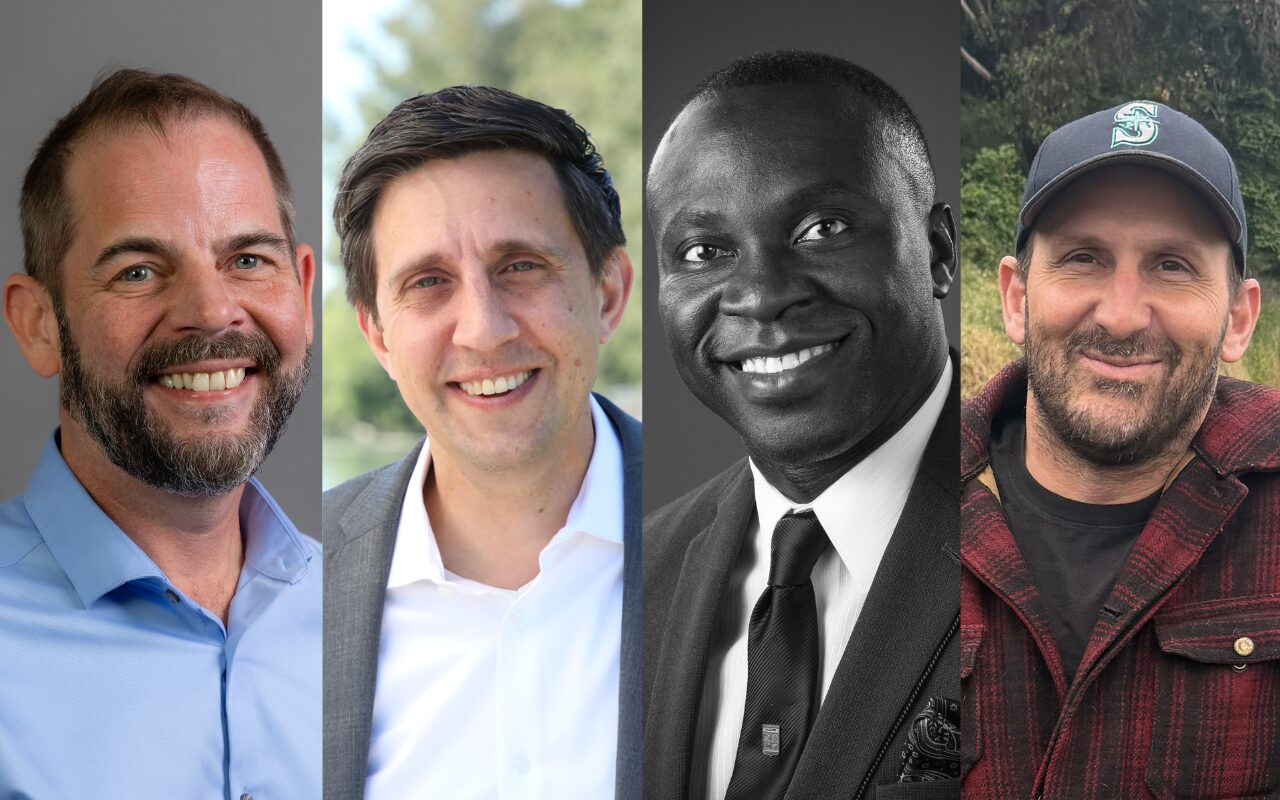
WHATCOM COUNTY, WA (MyBellinghamNow.com) – The 2026 Primary is here for Whatcom County. Ballots were mailed out Wednesday, July 15 and numerous races will be culled down for the region ahead of this November. Below are responses to questions sent to each candidate in the race for the Washington state 40th District Representative Postition 2. They have not been edited with the exception for typos and formatting reasons.
Monte Jay Mahan
Independent owner of an Audiology Practice for 24 years in Bellingham. Natural Resource Conservation, Pre-Med and Forestry programs completed at the University of Florida. Raised two kids who went through Whatcom K-12 public schools.
What do you see yourself bringing to the office that is an advantage over your opponents?
Totally local resident-focused Independent with no long-term political career in mind. Boots on the ground business experience and knowledge of what locals are saying they want.
What approach will you have as a leader?
The best interests of the residents in District 40 will lead me.
What policies from prior leadership do you agree with? Which ones would you like to see changed?
Increasing school funding, providing credits to reduce utilities, maintenance of ferries,and reducing expensive building regulations are good.
The state mandate to increase housing has pressured local communities to make rushed decisions with forever consequences. What good is more housing if it is still unaffordable? The cost of Basic required needs: food, water, gas, electricity need to be reduced or mitigated down to create more disposable income.
What public needs do you think need more attention that are currently underserved?
Access to safe streets and parks for children and young adults in our communities. The safety of anyone to walk around in public in Downtown Centers and parks and business districts. Lack thereof restricts access to recreation and business patrons. I think open air drug use and aggressive panhandling kind of go without saying.
What do you feel is your largest challenge in winning this election?
I need voters to hesitate for one second on District 40, Pos. 2 and vote for Monte instead of just voting straight down the D ticket. Please, slow down and vote for me.
Without the backing of the two major parties, what will be the biggest challenge of running as an Independent?
I am not backed by either major party, budgets for advertising and radio and signage are not funded by any Super PAC that is for sure. Also anything different to voters may present a risk, however I think it is a chance you should take on me, because I am not feeling like the local residents are winning at the table r5ight now.
Alex Ramel
I’ve served as your State Representative since 2020. Before that, I’ve worked on housing and climate policy in a number of roles at organizations familiar to many in Bellingham. As Program Director at Sustainable Connections I founded the Community Energy Challenge, creating living-wage jobs, cutting pollution, and reducing energy costs for thousands of people and businesses in Whatcom, Skagit, and San Juan counties. As President of the Board for Kulshan Community Land Trust I’ve helped to create affordable housing for low- and middle-income families.
What do you see yourself bringing to the office as an advantage over your opponents?
I stand out in this crowd because I have been doing this work for 6 years. During that time I’ve helped to fund affordable housing in our community with partners like the Opportunity Council. I’ve supported funding for our institutions like Western Washington University and Bellingham Technical College. I’ve helped to expand access to early childhood education facilities in our region. I’ve helped bring resources for local economic development on Bellingham’s waterfront. I’ve supported community priorities like mental health treatment and upgrades to our transportation infrastructure to protect our salmon. This experience and track record of success is where I stand out.
What approach will you have as a leader?
I believe in community service, and in a progressive vision for Washington State. I don’t always have the answer to every problem, but I can usually see ways to get people working together. That skill is really needed in Olympia; that’s why I was elected by other Representatives as the Majority Caucus Whip. Building a team that works together is critical to how I have been successful in getting things done for our community.
What policies from prior leadership do you agree with? Which ones would you like to see changed?
I’ll highlight a couple of big steps we’ve taken in the last few years that I am especially proud of having supported.
Passing the Millionaires Tax is a huge step toward tax fairness in Washington. About 20,000 Washingtonians with the largest paychecks soon will be paying what they owe to fund community priorities like education and healthcare. And at the same time we’ve committed to reduce taxes on those who earn the least and on the smallest businesses. That’s what tax fairness looks like.
We also passed Rent Stabilization. In a time where politicians are all talking about affordability, we took real action to make sure that extreme rent increases, greater than 10% per year, would no longer be allowed. Housing is the largest expense for most of us, and I was routinely hearing from people whose rent had been increased by $400 or more a month. That’s no longer allowed in Washington, and I’m proud to have helped make that happen.
What public needs do you think need more attention that are currently underserved?
Our state budget is our biggest focus, and must continue to be. Donald Trump’s tariffs, reckless cuts, and needless wars are causing chaos in our economy, and it means a disaster for our state finances. Our challenge will be to protect schools, vulnerable neighbors and healthcare while balancing the budget.
I’ve been working for several years on improving the reliability and affordability of our electric grid. We passed a major bill on electricity transmission last year, which will help a lot. But we have more to do, especially to strictly regulate data centers.
Many of our K-12 schools are in a real crisis. Shrinking student populations and increasing costs make it tough to balance these budgets. We’ve increased funding the past two years and improved local budget tools, but we need to keep making progress.
What do you feel is your largest challenge in winning this election?
I’ve worked hard to remain accessible and responsive to constituents. I have a reputation as an effective voice for our community, and a record of getting things done. I’ve been successful at passing bipartisan legislation, while remaining true to my progressive roots. I feel confident that as long as voters are hearing about this track record that I’ll continue to have the support of the community.
As one of multiple Democrats in this race, how do you distinguish yourself from other candidates?
I think my opponents all declared as either “independent” or “no party preference.”
I’m proudly a member of the Democratic Party; I believe in a vision of community working together for common good, and to create real opportunity for everyone. I work to elect other Democrats who share those values, and have for two decades. I’ve enjoyed the endorsement of the local Democratic Party every time I’ve run for office. In the legislature, I’ve been elected to a caucus leadership position by the other Democratic legislators.
Salomon Rodrigue Mbouombouo
I am a mechanical engineer with a background in community health and nonprofit systems. To put it simply: I don’t do politics—I solve problems. I engineer practical solutions for social issues affecting families across Whatcom, Skagit, and the Islands, especially where housing, childcare, and transportation pressures collide. For example, in Skagit, a small group of college students and working parents were commuting long distances because they couldn’t find affordable housing near campus. The long commute and unreliable transit led to missed classes and lost work hours. To fix this, I organized a small pilot project. I brought together neighborhood leaders, a local nonprofit, and a community college liaison. Together, we:
- Secured some funds to design a weekday community car sharing pilot program.
- Coordinated a volunteer childcare swap so parents could cover transit gaps.
Within three months, this model of transportation dramatically reduced missed classes, and parents reported fewer lost work hours. We even built a simple operations plan that the nonprofit used to scale up the service.
That simple project reinforced my belief that engineering methods—like mapping out bottlenecks, prototyping a solution, and measuring the results—translate directly into stronger, more resilient family support. I bring that exact same problem-solving lens to public service: listening to families, identifying where the system is breaking down, and designing practical, measurable fixes that help people keep their jobs, stay in school, and care for their children.
What do you see yourself bringing to the office as an advantage over your opponents?
I bring systems-thinking, engineering rigor, and emotional intelligence to the everyday challenges facing families across Whatcom, Skagit, and the Islands. I don’t do politics—I solve problems.
I combine project management discipline with real community health experience. That means looking at how housing, childcare, healthcare, and transit issues collide, and designing practical, cost-effective fixes.
For example, I recently worked with an Island mother whose husband had just deployed overseas, leaving her alone with a newborn and two toddlers, postpartum depression, and a nursing school schedule. When a major ferry delay and a childcare breakdown threatened her job, I brought together a local team: the mother, a doula, a community nurse, transit volunteers,
and a nonprofit coordinator.
Together, we built a safety net:
- We set up an overnight, on-call postpartum childcare roster.
- We negotiated ferry-time buffers with volunteer drivers.
- We created a simple protocol to help protect her job.
The result was immediate peace of mind for her family and a practical game plan our partners can now use to lift up others.
My goal is to help families rebuild their American Dream by shoring up these critical supports—childcare, housing, health, and transit—so parents can work and communities can thrive. I bring a problem-solving mindset that is accountable to taxpayers, centered on families, and grounded in measurable results.
What approach will you have as a leader?
I lead with emotional intelligence, systems thinking, and shared decision-making. To put it simply: I don’t ask ‘What’s in it for me?’—I engineer solutions by always asking, ‘What’s in it for families?’
I listen first—to parents, doulas, nurses, transit operators, employers, and frontline workers. Every decision I make centers on the well-being of families across Whatcom, Skagit, and the Islands. My leadership style is defined by three core approaches:
- Systems Thinking: I look at how challenges in housing, childcare, healthcare, and transit connect, then design practical fixes that stabilize the systems holding families up.
- Shared Decision-Making: I bring people together early and often. We co-design pilot projects, set clear performance milestones together, and use real, measurable outcomes to scale what works. I bring strict project management discipline to ensure transparency and protect taxpayer value.
- Emotional Intelligence: I use this to build trust, de-escalate conflict, and keep conversations focused on real solutions rather than political games. My leadership is collaborative, respectful, and relentlessly practical. My ultimate aim is to help families rebuild the American Dream by shoring up our critical community supports so parents can work, children can learn, and communities can thrive.
I will bring this exact problem-solving, family-centered approach to office. No Families Left Behind!
What policies from prior leadership do you agree with? Which ones would you like to see changed?
I support past efforts that expanded access to childcare, education, and healthcare because those investments directly reduce family stress. I also value local infrastructure projects that improved safety and connectivity across our counties.
But we need to change how we address the cost of living. Many families in Whatcom, Skagit, and the Islands are facing rising costs that outpace their wages.
We need a shift in focus to address three major gaps:
- Our Military Families: When a spouse is deployed overseas, leaving a partner alone with a newborn or kids struggling with mental health, we must have community systems ready to wrap around them.
- Our Veterans: Our veterans shouldn’t have to fight to keep their homes against rising property taxes, or pay steep sales taxes on necessary everyday tools like a family car, after a lifetime of sacrifice. They deserve our full support.
- The Childcare Crisis: Too many working families living just one paycheck above the poverty line are still being squeezed out by childcare costs.
My approach is simple: preserve what works, and fix what doesn’t.
I will protect effective healthcare and education programs while insisting on transparent, measurable outcomes. I will reform underperforming areas by using phased pilot projects so taxpayers get durable value without projects ballooning in cost.
Finally, I will ensure we co-design solutions alongside local parents, doulas, nurses, and transit operators. This isn’t about political slogans—it’s about practical stewardship of our public resources and ensuring no family is left behind.
What public needs do you think need more attention that are currently underserved?
Families across Whatcom, Skagit, and the Islands face interconnected pressures that remain deeply underserved: housing affordability, childcare capacity, dependable transit, and mental health support. These are the load-bearing supports of family life—when one fails, the entire system wobbles.
I see critical gaps in four key areas:
- Housing Affordability: Skyrocketing costs and property taxes are forcing working families and students to commute massive distances just to work and go to school, leaving them vulnerable to any minor disruption.
- The Childcare Crisis: Childcare is so scarce and expensive that many households are forced into single-earner models by necessity, keeping families just one paycheck above the poverty line.
- Transit and Ferry Fragility: For our ferry-dependent and rural communities, a single schedule breakdown triggers a cascade of lost wages, missed medical appointments, and childcare failures. Reliable transit is essential family infrastructure.
- Maternal & Mental Health Support: We desperately need early intervention, especially community-based doulas trained in mental health screening. They can offer a vital lifeline to new mothers who are left vulnerable, particularly when partners are deployed overseas.
I stand firmly with our military and veteran families who face immense stress, yet feel the weight of navigating rickety systems on the back of their courageous sacrifices. I hear these struggles clearly, and my focus is helping families rebuild the American Dream by shoring up these foundational supports. Through shared decision-making and practical engineering discipline, I will work to ensure that families’ voices are strongly reflected.
What do you feel is your largest challenge in winning this election?
My largest challenge is visibility—simply making sure families across Whatcom, Skagit, and the Islands know that there is a practical, non-political option on the ballot.
I am not a career politician. I am a mechanical engineer and a community health advocate. My challenge is helping voters understand that I lead with emotional intelligence, shared decision-making, and engineering rigor to solve the everyday problems keeping their households from thriving.
I am overcoming this challenge with a highly focused, grassroots plan:
- Sharing Local Successes: I’m sharing real, verifiable examples of how we’ve already solved community issues—like bringing together a local network to set up emergency transit and childcare support for a deployed military spouse. Showing real results builds trust faster than political slogans.
- Active Community Partnerships: I am building shared ownership by convening residents, doulas, nurses, transit operators, employers, and nonprofits. When the community co-designs the solutions, they become our strongest advocates.
- Demonstrating Fiscal Responsibility: I bring strict project management discipline to public service. By focusing on phased pilots and clear metrics, I show skeptical taxpayers and media editors that we can deliver durable results without ballooning costs.
- Targeted Grassroots Outreach: Rather than scattershot messaging, I am focusing on direct outreach—community forums, local media, and neighborhood roundtables—especially in areas hit hardest by housing and transit fragility.
Visibility isn’t just about being seen; it’s about being understood and trusted. By focusing on real-world solutions rather than partisan politics, I am turning technical credibility into community confidence.
Without the backing of the two major parties, what will be the biggest challenge of running as an Independent?
Running as an Independent means building trust without the infrastructure of a major political party. The challenge is reaching voters directly to show them that my focus is on their lived experiences, not partisan games.
But because I don’t answer to party lines, I answer directly to families. My focus is strictly on solving real-world problems.
To bridge the infrastructure gap, my campaign is focused on three things:
- Building Grassroots Trust: I am meeting families and real everyday people where they are—at community centers, local businesses, and neighborhood forums. By keeping the focus on real solutions rather than partisan talking points, we are earning confidence the old-fashioned way.
- Practical Fiscal Stewardship: I apply strict engineering and project-management principles to public spending. That means insisting on complete transparency, clear project scopes, and phased rollouts that deliver maximum value for every taxpayer dollar.
- Protecting Family Stability: I am relentlessly focused on shoring up our critical community supports—childcare, housing, healthcare, and transit.
Running as an Independent is hard work, but it is the only way to ensure local voices aren’t drowned out by party politics. I lead with emotional intelligence, shared decision-making, and strict project discipline so our taxpayers get durable value, and no family, including our single-member families, is left behind.
Joseph Segault
To be entirely clear, I am not a politician. I am a family man, business owner, and an active member of my community. I care deeply about our local needs such as; affordability, health and safety in our communities, accountability at the state level and transparent tax structure that inspires confidence not confusion.
What do you see yourself bringing to the office that is an advantage over your opponents?
The biggest advantage I believe I have over the other candidates is that I am an independent. People seem to be fed up with career politicians that don’t properly represent the communities but instead spend insane amounts of time and money fulfilling their donors desires.
What policies from prior leadership do you agree with? Which ones would you like to see changed?
I’m not a big fan of increasing taxes without showing the people where all the money actually goes. We need to be accountable to our constituents.
What public needs do you think need more attention that are currently underserved?
One of the biggest needs in our communities is having an option on who to vote for. The one party system that we currently operate under has left nearly half the population with zero voice in Olympia.
What do you feel is your largest challenge in winning this election?
The hardest challenge moving into the primary is that the incumbent is backed by one of the wealthiest institutions in America, the DNC. My campaign is supported by a groundswell of grassroots everyday hardworking families.
My Bellingham Now is committed to providing equal opportunities to candidates in the Whatcom County region. This is part of a series of emailed questionnaires our team sent to candidates in elections likely to see eliminations in the 2026 Primary. Read responses from candidates in the following races: